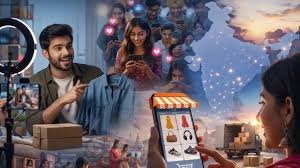
There’s been a subtle shift happening in the way small and mid-sized brands operate. You won’t always notice it in big headlines, but it’s there—in Instagram ads, in late-night website browsing, in that oddly satisfying feeling when a product arrives directly from the brand that made it.
Local brands, especially in India, are no longer waiting for shelf space in big retail stores. They’re building their own digital storefronts, telling their own stories, and—perhaps most importantly—owning their customer relationships. It’s not just a trend. It’s a recalibration.
The Middleman Is Slowly Losing Relevance
For years, the traditional retail model felt like the only way forward. Manufacture a product, convince a distributor, fight for visibility in stores, and hope customers notice.
But that system had its limitations. Margins were squeezed. Branding got diluted. And customer feedback? It often got lost somewhere between the retailer and the manufacturer.
Direct-to-consumer (D2C) flips that entirely. Brands now sell straight to the customer—through their own websites, apps, or even social platforms. No intermediaries, fewer compromises.
It’s not always easy, but it’s undeniably empowering.
Control Over Brand Storytelling
One of the most underrated benefits of going D2C is control. Not just over pricing or inventory—but over narrative.
When a brand owns its platform, it decides how its story is told. The tone, the visuals, the experience—it’s all intentional. You’re not just selling a product; you’re building a personality.
Think of it like this: instead of being one product among hundreds on a crowded shelf, a D2C brand becomes its own little universe. Customers step into that world, even if it’s just through a website.
And that changes how people connect with it.
Data Is the New Currency
Here’s something traditional retail rarely gave brands—direct customer data.
With D2C, every click, every purchase, every abandoned cart tells a story. Brands can understand what works, what doesn’t, and what needs tweaking.
It’s not just about numbers; it’s about insights. Real, actionable insights that help brands evolve faster than ever before.
And in a market as dynamic as India’s, that kind of agility can be the difference between staying relevant and fading out.
So Why Is This Shift Happening So Fast?
At some point, you start asking the bigger question: Local brands ka D2C shift kyun fast ho raha hai?
The answer isn’t one thing—it’s a mix of timing, technology, and changing consumer behavior.
Digital infrastructure has improved. Payment systems are smoother. Logistics, while not perfect, are far better than they were a decade ago. And consumers? They’re more comfortable buying online than ever before.
There’s also a growing preference for authenticity. People like buying from brands that feel real, relatable, maybe even a bit imperfect. D2C allows that kind of connection to exist.
Social Media Isn’t Just Marketing Anymore
Platforms like Instagram and YouTube have blurred the line between discovery and purchase. A product can go from “never heard of it” to “just ordered it” in a matter of minutes.
Local brands are leveraging this beautifully. They’re not just running ads—they’re building communities. Engaging with comments, sharing behind-the-scenes content, even responding to customer feedback in real time.
It feels less transactional, more conversational. And that matters.
The Economics Make Sense (Most of the Time)
Let’s talk numbers, but briefly.
By cutting out middlemen, brands can either improve their margins or offer better prices to customers—or sometimes both. It’s a balancing act, but it opens up possibilities that traditional retail simply doesn’t.
Of course, D2C comes with its own costs—marketing, logistics, customer service. It’s not a shortcut. But for many brands, the trade-off feels worth it.
Challenges Still Exist—and They’re Real
It would be unfair to paint D2C as a perfect model. It’s not.
Customer acquisition costs can be high. Competition is intense. And managing everything—from inventory to delivery—requires a level of operational discipline that not every brand is ready for.
There’s also the trust factor. Established retail stores still carry a sense of reliability that new D2C brands have to earn over time.
But here’s the thing—most brands entering this space are aware of these challenges. They’re not naive; they’re just willing to adapt.
What This Means for the Future
The rise of D2C doesn’t mean traditional retail will disappear. It just means the balance is shifting.
We’re moving toward a hybrid world—where brands might still use retail channels, but won’t depend on them entirely. Where customer relationships are more direct, more personal.
And where local brands, once limited by geography or distribution networks, can suddenly reach customers across the country—or even beyond.
A Shift That Feels Personal
At its core, the D2C movement isn’t just about business strategy. It’s about connection.
It’s about a customer buying a product and knowing exactly who made it, why it exists, and what it stands for. That kind of transparency wasn’t always possible.
And maybe that’s why this shift feels different. Not louder, not flashier—but more meaningful.
Because when brands speak directly to people, without filters or middlemen, something changes. The transaction becomes a relationship. And that’s not easy to replace.