Category: Education

  • When Homework Meets AI: A Quiet Shift in How Students Learn

    When Homework Meets AI: A Quiet Shift in How Students Learn

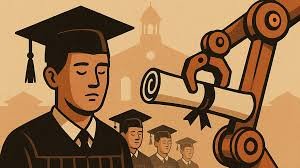
    There’s a familiar scene most of us remember—late-night homework, a half-open textbook, maybe a quick Google search, and that slight panic when nothing makes sense. Fast forward to today, and that same moment looks… different. A student opens a laptop, types a question into an AI tool, and within seconds, gets a structured answer, sometimes even better than what a teacher might explain in class.

    It feels efficient. Almost too efficient. And somewhere in that ease lies a bigger question about how learning itself is changing.


    The Shortcut That Doesn’t Feel Like One

    AI tools don’t announce themselves as shortcuts. They present as helpers—assistants that clarify doubts, simplify concepts, and save time. And to be fair, they do all of that.

    A student struggling with a math problem can now get a step-by-step explanation. Someone writing an essay can receive guidance on structure, tone, even phrasing. It’s like having a tutor available 24/7, without the awkwardness of asking “basic” questions.

    But here’s where it gets tricky. When answers come this easily, the line between learning and just completing tasks starts to blur.


    Understanding vs Completing

    Homework was never just about finishing assignments. It was meant to build thinking—slow, sometimes frustrating thinking.

    With AI, that process can get compressed. Instead of wrestling with a concept, students might jump straight to the solution. The work gets done, but the depth of understanding? That’s less certain.

    This doesn’t mean AI is harmful. It just means it changes the role of effort. The challenge now is figuring out how to use these tools without letting them replace the thinking process entirely.


    A New Kind of Academic Pressure

    Interestingly, AI hasn’t removed pressure—it’s shifted it.

    Students now feel the need to “keep up” not just with peers, but with tools. If everyone has access to polished answers, the expectation for quality rises. Submitting something average suddenly feels… inadequate.

    Teachers, on the other hand, are trying to adapt. Some redesign assignments to be more application-based. Others focus on in-class work where AI can’t easily step in.

    It’s an evolving dynamic, and no one really has all the answers yet.


    So, What’s Actually Changing?

    At some point, the conversation naturally leads to a broader reflection: AI tools ka homework aur assignments par effect is not just about convenience—it’s about redefining what “doing homework” even means.

    In many ways, homework is becoming less about producing answers and more about demonstrating understanding. The tools can generate content, but they can’t fully replicate personal insight or original thought—at least not convincingly.

    This shift, subtle as it is, might push education toward more meaningful assessments. Or it might create new challenges. Probably both.


    The Good Side We Can’t Ignore

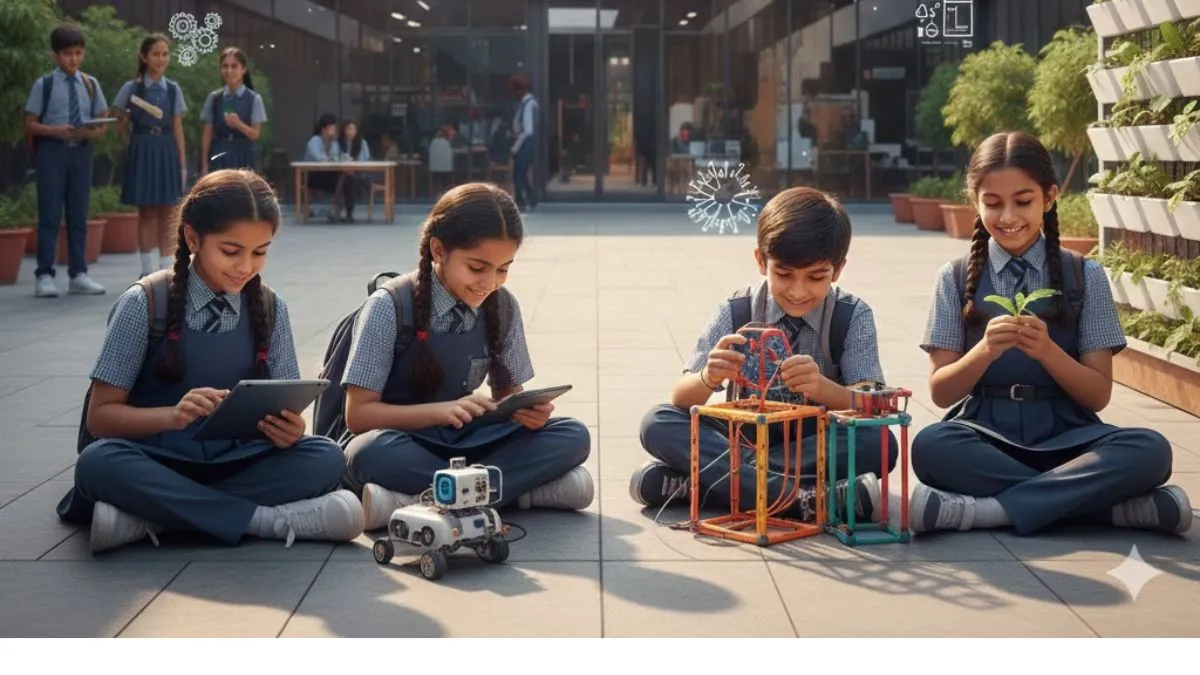
    It would be unfair to paint AI tools as a problem. For many students, especially those who struggle with traditional teaching methods, these tools are a lifeline.

    They make learning more accessible. They reduce frustration. They allow students to explore topics at their own pace.

    A student who hesitates to ask questions in class can now learn privately, without fear of judgment. That alone is a big deal.

    And for subjects that require repetitive practice or explanation, AI can be incredibly effective.


    Where It Gets Complicated

    The concern isn’t about using AI—it’s about over-relying on it.

    When students start depending on AI for every answer, they risk losing the ability to think independently. Writing skills can become mechanical. Problem-solving can feel unfamiliar without assistance.

    There’s also the question of authenticity. If an assignment is mostly generated by AI, what does it really represent? The student’s understanding—or the tool’s capability?

    These aren’t easy questions, and they don’t have clear boundaries.


    Finding a Balance (Without Overthinking It)

    Maybe the solution isn’t strict rules or complete freedom, but something in between.

    Using AI to understand a concept? That makes sense.
    Using it to check your work? Also reasonable.
    Using it to do everything for you? That’s where things start to slip.

    It comes down to intention. Are you using the tool to learn, or just to finish faster?

    Teachers and students alike are still figuring this out. It’s not a settled system—it’s a work in progress.


    The Future of Homework Might Look Different

    If you zoom out a little, it’s clear that homework, as we knew it, is evolving.

    Assignments might become more discussion-based, more reflective, more focused on real-world application. The kind of work that can’t be easily outsourced to a tool.

    And maybe that’s not a bad thing.

    Because at its best, education isn’t about perfect answers. It’s about curiosity, confusion, and those small moments of clarity that come after struggling with an idea.


    A Quiet Transformation

    AI hasn’t dramatically disrupted homework overnight. It’s more subtle than that.

    It’s changed how students approach problems. How teachers design assignments. How learning itself is experienced.

    And while it’s easy to focus on the risks, there’s also an opportunity here—to rethink what education should prioritize in a world where information is always within reach.

    In the end, the tools will keep improving. That part is inevitable. The real question is how we choose to use them—and what we decide still matters when everything else becomes easier.

  • Learning in Small Bites: Do Micro-Learning Apps Really Make Students More Productive?

    Learning in Small Bites: Do Micro-Learning Apps Really Make Students More Productive?

    There was a time when studying meant sitting at a desk for hours, textbooks open, mind slowly drifting somewhere between page 12 and page 13. Now, things look very different. A student can learn a concept while waiting for a bus, revise formulas in a five-minute break, or watch a quick explainer before bed.

    This shift toward shorter, focused learning sessions — often powered by apps — has quietly changed how students approach education. But somewhere beneath the convenience, a deeper question sits: are these quick bursts of learning actually helping, or just making us feel productive?

    The Rise of Learning in Minutes, Not Hours

    Micro-learning apps are built on a simple idea — break complex topics into small, digestible pieces. Instead of overwhelming students with long lectures or dense chapters, they deliver information in bite-sized formats. A short video here, a quick quiz there.

    And honestly, it fits perfectly into modern life. Attention spans are shorter, schedules are packed, and distractions are everywhere. In that environment, asking someone to sit and study for two uninterrupted hours feels almost unrealistic.

    Micro-learning meets students where they are — on their phones, in between tasks, in those odd little pockets of time that usually go unused.

    Why It Feels So Effective

    There’s a psychological hook to micro-learning that’s hard to ignore. Completing a small lesson gives an immediate sense of accomplishment. It’s quick, satisfying, and repeatable.

    Instead of the heavy mental load of “I need to study everything,” it becomes “I’ll just do one module.” And often, that one module turns into three or four.

    This is where Micro-learning apps ka student productivity par impact starts to show up in subtle ways. Students feel more in control of their learning, less overwhelmed, and more likely to stay consistent — which, if you think about it, is half the battle.

    The Good Side: Consistency Over Intensity

    One of the biggest advantages of micro-learning is consistency. It encourages daily engagement without feeling like a burden.

    A student who studies 15 minutes every day might actually retain more over time than someone who crams for hours once a week. The spaced repetition, the regular exposure — it builds familiarity in a way that feels almost effortless.

    Plus, these apps often use interactive elements — quizzes, flashcards, gamified progress — which keeps things engaging. It’s not just passive learning; it’s active participation.

    But There’s a Catch

    As convenient as micro-learning is, it’s not a perfect solution.

    Some subjects simply require deep focus. You can’t fully understand complex theories, write detailed essays, or solve advanced problems in tiny fragments alone. At some point, you need to sit down and go deeper.

    There’s also the risk of illusionary productivity. Watching a few short videos might feel productive, but without reflection or practice, the knowledge can remain shallow. It’s like skimming the surface without really diving in.

    And let’s be honest — studying on a phone comes with its own distractions. One notification, one quick scroll, and suddenly those five minutes turn into thirty.

    Finding the Right Balance

    This is where things get interesting. Micro-learning doesn’t have to replace traditional study methods — it can complement them.

    Think of it as a tool, not a complete system.

    Use micro-learning apps for revision, quick concept understanding, or staying consistent during busy days. Then, dedicate longer sessions for deeper study — solving problems, writing notes, or really engaging with the material.

    It’s a bit like fitness. Short daily exercises help maintain rhythm, but occasionally, you still need a proper workout.

    Who Benefits the Most?

    Micro-learning works especially well for certain types of learners.

    Students who struggle with long attention spans often find it easier to stay engaged with shorter content. Similarly, those juggling multiple responsibilities — college, part-time work, personal commitments — can fit learning into their schedules more easily.

    It’s also helpful for exam preparation, where quick revisions and repeated exposure can make a noticeable difference.

    But for learners who prefer immersive, uninterrupted study, micro-learning alone might feel fragmented. It all comes down to personal learning style.

    A Subtle Shift in How We Learn

    What’s really happening here isn’t just a change in tools — it’s a shift in mindset.

    Learning is becoming more flexible, more adaptable. It’s no longer confined to a desk or a fixed schedule. And while that flexibility is empowering, it also requires a bit more self-awareness.

    Because when learning becomes easy to access, it also becomes easy to take lightly.

    So, Are Micro-Learning Apps Worth It?

    In a word — yes, but with context.

    They’re incredibly useful for building habits, staying consistent, and making learning less intimidating. They lower the barrier to entry, which is often the hardest part.

    But they’re not a shortcut to deep understanding. They’re a starting point, a support system, a way to keep the momentum going.

    And maybe that’s enough.

    Because sometimes, the difference between learning and not learning isn’t intelligence or resources — it’s simply showing up. Even if it’s just for five minutes at a time.

  • Degrees, Skills, and the Space In Between: How India Is Rethinking Education

    Degrees, Skills, and the Space In Between: How India Is Rethinking Education

    There’s a familiar scene in many Indian households—someone asking, “Beta, degree kya kar rahe ho?” It’s almost reflex. For years, degrees have been the benchmark of success, the safe route, the thing that promises stability.

    But lately, something feels different. The conversation is shifting, slowly but noticeably. People are asking new questions. Not just what you studied, but what you can actually do.

    And somewhere in that shift lies a bigger story about how India is rethinking education itself.

    The Comfort of Degrees (and Why They Still Matter)

    Let’s be honest—degrees haven’t lost their value overnight. Far from it.

    In many industries, they’re still essential. Medicine, law, engineering—these fields require structured learning, formal validation, and years of academic training. You can’t shortcut your way into being a surgeon, and no one would want you to.

    Degrees also carry a certain social weight. They signal discipline, persistence, and a level of credibility that’s still widely respected.

    But here’s the catch: a degree alone doesn’t guarantee competence anymore. And people are starting to notice that gap.

    The Rise of Skill-Based Learning

    Scroll through LinkedIn or job portals, and you’ll see a pattern. Employers are less interested in where you studied and more interested in what you can build, solve, or create.

    This is where skill-based learning steps in.

    Online courses, bootcamps, certifications—these aren’t just side options anymore. They’ve become primary learning paths for many, especially in fields like digital marketing, design, coding, and content creation.

    And the appeal is obvious. Skill-based learning is faster, often more practical, and closely aligned with real-world demands. You learn something, you apply it, you see results.

    It’s a very different rhythm compared to traditional education.

    Why This Shift Is Happening Now

    Part of it is economic. The job market is evolving faster than university curriculums can keep up. By the time a course is updated, the industry might have already moved on.

    Then there’s the internet—arguably the biggest disruptor. Information is more accessible than ever. You don’t need to sit in a classroom to learn Photoshop or Python anymore. You just need curiosity, consistency, and a decent Wi-Fi connection.

    There’s also a generational shift. Younger learners are more willing to experiment, to take unconventional paths. They’re less afraid of stepping outside the “safe” route.

    The Middle Ground Most People Miss

    It’s tempting to frame this as a battle—skills vs degrees. But in reality, it’s not that binary.

    Some of the most successful professionals combine both. They use their degree as a foundation and build practical skills on top of it.

    A commerce graduate who learns digital marketing. An engineer who picks up UI/UX design. A literature student who dives into content strategy.

    That blend—structured knowledge plus hands-on skills—is where things get interesting.

    The Big Question Everyone’s Asking

    At some point, the conversation circles back to the same thought: Skill-based learning vs degree-based education: India me kya trend hai?

    The answer isn’t a simple one.

    Yes, skill-based learning is gaining momentum. It’s more visible, more talked about, and in many cases, more immediately rewarding. But degrees aren’t disappearing. They’re evolving, slowly adapting to include more practical components.

    What we’re seeing isn’t a replacement—it’s a rebalancing.

    Challenges on Both Sides

    Of course, neither path is perfect.

    Skill-based learning can sometimes lack depth. Without proper guidance, it’s easy to skim the surface without truly mastering something. There’s also the issue of credibility—not all certifications carry equal weight.

    On the other hand, degree-based education can feel outdated or disconnected from industry needs. Students often graduate with theoretical knowledge but limited practical exposure.

    It’s a bit like choosing between a map and a compass. One gives you structure, the other gives you direction. Ideally, you’d want both.

    What This Means for Students Today

    If you’re a student right now, this shift can feel confusing. There’s no single “right” path anymore.

    But maybe that’s not a bad thing.

    It means you have options. You can tailor your learning journey based on your interests, strengths, and goals. You’re not locked into a predefined route.

    The key is to stay curious—and honest with yourself. What do you enjoy? What are you good at? What kind of work excites you?

    Those questions matter more than ever.

    Final Thoughts

    Education in India isn’t being replaced—it’s being reimagined.

    Degrees still hold value, but they’re no longer the only measure of success. Skills are stepping into the spotlight, bringing flexibility and relevance to the table.

    And somewhere in between, a new kind of learner is emerging. One who doesn’t just collect qualifications, but builds capabilities.

    It’s not a clean transition. It’s messy, evolving, sometimes even contradictory.

    But then again, most meaningful changes are.