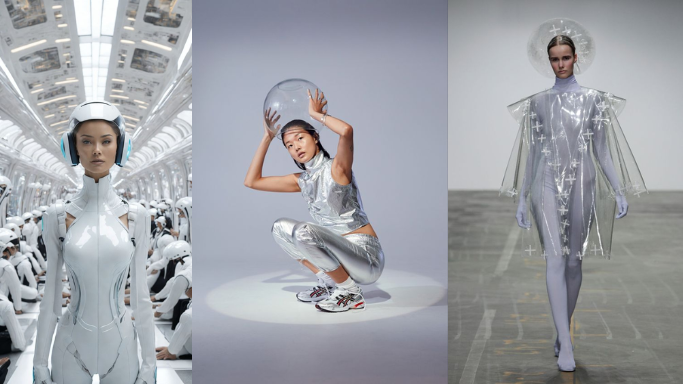
There was a time when “getting dressed” meant standing in front of a wardrobe, not a screen. You’d pick a shirt, maybe change twice, check the mirror, and head out. Simple. Physical. Tangible.
Now, though, something quietly strange is happening. People are buying outfits they’ll never touch. Clothes that exist only on screens—worn once for a photo, a reel, or even just a virtual avatar. At first glance, it sounds like a gimmick. But stay with it a bit longer, and it starts to feel… inevitable.
What Is Digital Fashion, Really?
Digital fashion isn’t just about fancy filters or gaming skins, though those are part of it. It’s about clothing designed purely for the digital world—3D garments you can “wear” in photos, videos, or virtual environments.
Think of it as fashion unbound by fabric. No stitching, no material constraints, no gravity if you don’t want it. Designers can create pieces that glow, float, morph—things that would be impossible (or wildly impractical) in real life.
And surprisingly, people are paying for it.
Why Are People Buying Clothes They Can’t Physically Wear?
It sounds absurd until you think about how much of our lives now exist online.
Social media has become a stage. And like any stage, appearance matters. But unlike real life, where repeating outfits is normal, digital spaces create pressure to constantly look “new.”
Digital fashion offers a workaround. You can wear something once—digitally—and move on, without cluttering your closet or spending on physical garments.
There’s also a sustainability angle. Fast fashion has long been criticized for its environmental impact. Digital clothing, at least in theory, reduces waste. No shipping, no production leftovers, no discarded fabrics.
Of course, it’s not entirely impact-free (servers and tech have their own footprint), but it’s a different equation.
The Role of Gaming and the Metaverse
If you’ve ever played a game where you customized your character, you’ve already interacted with digital fashion.
Platforms like virtual worlds and gaming ecosystems have normalized the idea of paying for appearance upgrades. Skins, outfits, accessories—they’ve been around for years.
What’s changing now is the crossover into everyday life. As conversations around the “metaverse” grow, the idea of having a digital identity—complete with a wardrobe—doesn’t feel so far-fetched anymore.
It’s less about replacing reality and more about expanding it.
Designers Are Experimenting in New Ways
For designers, digital fashion is both freeing and challenging.
On one hand, there are no physical limitations. You don’t have to worry about fabric costs or production logistics. Creativity can run wild.
On the other hand, the rules of value are different. What makes a digital outfit “worth” something? Is it exclusivity? Design complexity? Brand association?
Some luxury brands are already stepping into this space, launching digital collections alongside physical ones. Independent designers, too, are finding opportunities—often without the barriers that exist in traditional fashion.
It’s a bit like the early days of the internet. Uncertain, experimental, but full of possibility.
So Where Is This All Going?
At some point, the curiosity turns into a bigger question: Digital fashion aur virtual clothing ka future kya hai?
The honest answer? It’s still unfolding.
There’s potential for digital wardrobes to become as common as social media profiles. People might own a mix of physical and digital clothing, choosing what to wear based on context—real-world events or online presence.
Augmented reality could play a role too. Imagine pointing your phone at yourself and seeing a completely different outfit layered over your real one. Not just for fun, but for events, meetings, maybe even shopping decisions.
But adoption will depend on accessibility. If the tech remains expensive or complicated, it’ll stay niche. If it becomes seamless, it could go mainstream faster than expected.
The Skepticism Is Real (and Fair)
Not everyone is convinced, and that’s understandable.
For many, clothing is deeply personal—tied to touch, comfort, and physical expression. Digital fashion can’t replace that. At least not entirely.
There’s also the question of ownership. If your digital outfit exists on a platform, do you really own it? What happens if the platform disappears?
These concerns aren’t minor. They’ll shape how the industry evolves.
A Blended Future, Perhaps
Maybe the future isn’t about choosing between physical and digital fashion. Maybe it’s about blending the two.
You wear something comfortable in real life, but style it digitally for an online audience. Or you test a bold look virtually before deciding to buy a physical version.
It’s less about replacement and more about expansion—adding another layer to how we express ourselves.
Final Thoughts
Digital fashion still feels a bit unreal, like something that belongs in a concept video rather than everyday life. But then again, so did online shopping once.
The way we present ourselves is changing, shaped by the spaces we inhabit—both physical and digital. And fashion, as always, is adapting.
Whether digital clothing becomes a staple or remains a niche curiosity, one thing is clear: the idea of “getting dressed” is no longer limited to what hangs in your wardrobe.
Sometimes, it’s just a few clicks away.