
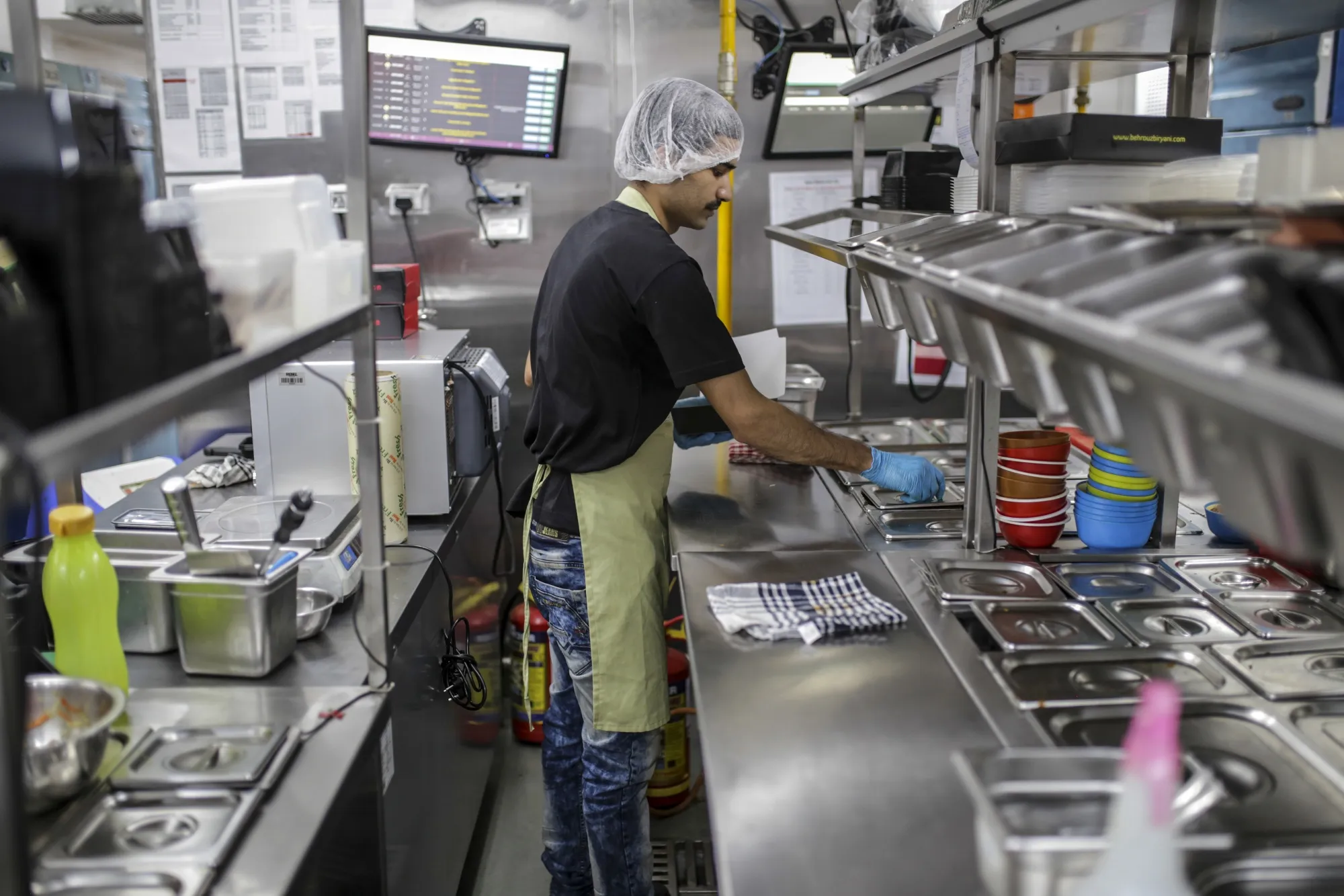
If you’ve ordered food online in the last couple of years—and let’s be honest, most of us have—you’ve probably eaten from a cloud kitchen without even realizing it. No storefront, no dine-in space, sometimes not even a recognizable brand name. Just a menu on your phone, a few taps, and a delivery at your door.
It’s a simple experience on the surface. But behind it sits a business model that’s surprisingly lean, a little experimental, and in many cases, quite profitable when done right.
What Exactly Is a Cloud Kitchen?
At its core, a cloud kitchen (also called a ghost kitchen or dark kitchen) is a delivery-only restaurant. No tables, no waiters, no front-facing presence. Everything revolves around preparing food for online orders.
Related reading: Street Food and Clean Plates: How Hygiene Is Slowly Changing on India’s Roads
These kitchens often operate out of compact spaces, sometimes shared among multiple brands. One kitchen might run three or four different menus—say, biryani, Chinese, and burgers—all under separate brand names.
It sounds a bit chaotic, but that’s actually where the efficiency comes in.
Lower Costs, Higher Flexibility
Traditional restaurants come with heavy overheads—rent for prime locations, interior design, staff for service, and so on. Cloud kitchens skip most of that.
Related reading: Back to the Basics: What Happens When You Add Millets to Your Daily Diet?
You don’t need a fancy address. You don’t need décor that impresses Instagram. What you do need is a well-optimized kitchen, reliable suppliers, and a system that can handle online orders smoothly.
This lower cost structure gives cloud kitchens a major advantage. They can experiment more, pivot faster, and scale without the usual financial burden.
But—and this is important—lower costs don’t automatically mean higher profits. Execution still matters.
The Role of Food Delivery Platforms
Platforms like Zomato and Swiggy are central to the cloud kitchen ecosystem.
They bring visibility, traffic, and convenience. But they also take a commission, which can range anywhere from 15% to 30% per order. That’s a significant cut.
For cloud kitchen owners, this creates a balancing act. You rely on these platforms for reach, but you also need to maintain margins.
Some brands try to offset this by encouraging direct orders through their own apps or websites. Others focus on optimizing their menu pricing and portion sizes.
There’s no one-size-fits-all approach here.
Multiple Brands, One Kitchen
One of the more fascinating aspects of cloud kitchens is the multi-brand strategy.
Instead of running a single restaurant, operators often launch multiple virtual brands from the same kitchen. Each brand targets a different audience or cuisine.
For example, a single kitchen could run a late-night snack brand, a healthy meal brand, and a comfort food brand—all at once. The ingredients might overlap, the staff is shared, but the branding feels distinct.
It’s a clever way to maximize output without significantly increasing costs.
Data-Driven Decisions
Unlike traditional restaurants that rely heavily on intuition and experience, cloud kitchens have access to real-time data.
What’s selling, what’s not, peak order times, customer preferences—it’s all tracked. This allows operators to tweak menus, pricing, and even branding based on actual performance.
If a particular dish isn’t working, it can be replaced quickly. If a new cuisine is trending, it can be introduced without a full-scale relaunch.
This agility is one of the biggest strengths of the model.
So, How Do They Actually Make Money?
At some point, the curiosity naturally turns into a practical question: Cloud kitchens ka profit model India me kaise kaam karta hai?
The answer lies in a combination of factors—low overhead costs, efficient operations, smart pricing, and high order volumes.
Profit margins often depend on how well a kitchen manages its costs. Ingredients, packaging, delivery commissions, and staff salaries all play a role. Even small inefficiencies can eat into profits.
Successful cloud kitchens focus on consistency. Not just in food quality, but in operations. They streamline processes, reduce waste, and build menus that are both popular and cost-effective.
It’s less about big margins on a single dish and more about steady, scalable income over time.
Challenges That Can’t Be Ignored
Of course, the model isn’t without its challenges.
Competition is intense. Since entry barriers are relatively low, new brands keep popping up. Standing out in a crowded marketplace requires strong branding and consistent quality.
There’s also the dependency on delivery platforms, which we touched on earlier. Any change in commission rates or algorithms can impact visibility and profitability.
And then there’s customer loyalty—or the lack of it. With so many options available, customers often switch between brands based on offers, ratings, or even just mood.
Building a loyal customer base takes effort.
The Human Side of It
What often gets overlooked in all this is the human element.
Behind every cloud kitchen is a team—chefs, kitchen staff, delivery partners—working in a fast-paced, sometimes high-pressure environment. The lack of a physical restaurant doesn’t mean the work is any less demanding.
In fact, the focus on speed and efficiency can make it even more intense.
Final Thoughts
Cloud kitchens are not just a trend—they’re a response to how people eat today. Convenience, variety, and speed have become priorities, and this model fits right into that lifestyle.
For entrepreneurs, it offers a relatively accessible entry into the food business. For customers, it expands choices without adding complexity.
Will it replace traditional restaurants? Probably not. There’s still something irreplaceable about dining out—the ambiance, the experience, the social aspect.
But as a parallel system, quietly powering the delivery boom, cloud kitchens are here to stay. And if managed well, they can be surprisingly profitable—just not in the ways you might expect at first glance.