
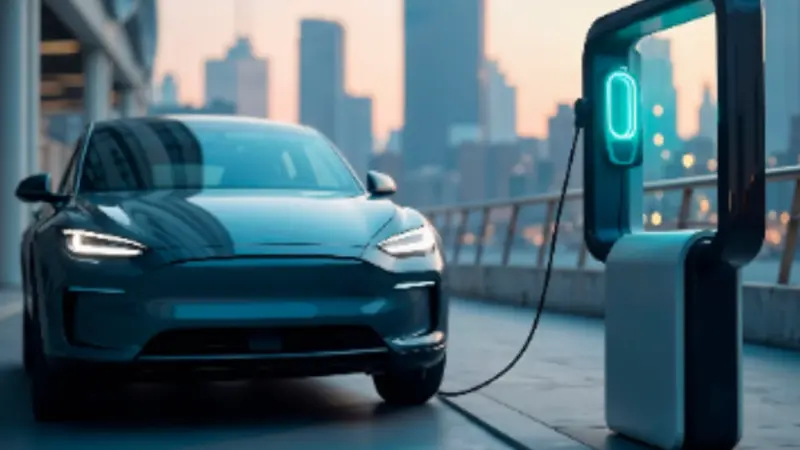
There’s something oddly satisfying about watching a new technology slowly become… normal. Electric vehicles, or EVs, in India are going through that exact phase right now. A few years ago, they felt experimental, almost like a bold statement. Today, they’re part of everyday conversations—especially if you’ve ever sat with friends debating petrol prices over chai.
But here’s the thing people don’t talk about enough: resale value. Not the shiny brochure numbers, not the range claims—but what happens after you’ve used the car for a few years. That question quietly influences buying decisions more than most of us admit.
The Psychology Behind Resale Value
In India, resale value isn’t just a number—it’s a mindset. Whether it’s a car, phone, or even furniture, we tend to think ahead. “Kitne me bikega?” is almost instinctive.
Related reading: What It Really Costs to Drive: Hybrid vs CNG Cars in India Over the Long Run
With EVs, though, the answer isn’t as straightforward. Traditional petrol and diesel cars have decades of resale patterns behind them. Buyers know what to expect. EVs? Not quite there yet. And that uncertainty creates hesitation, especially among first-time buyers.
Still, it’s changing—slowly, but surely.
Battery: The Heart (and Biggest Question Mark)
Let’s not sugarcoat it—the battery is the biggest factor affecting EV resale value. It’s also the biggest source of anxiety.
Related reading: Audi RS6 C8 Downpipes and Mercedes GT63 X290 Downpipes: Performance Upgrade Guide
Unlike an engine, which people understand and trust, batteries feel… unpredictable. How long will they last? Will replacement costs drop? What happens if performance degrades?
The good news is that battery technology is improving faster than most expected. Many manufacturers now offer warranties of 8 years or more. That alone adds a layer of confidence.
But resale buyers will still ask questions. And honestly, they should.
Related reading: The Hidden Side of Smart Driving: Are Connected Cars Really Safe?
Government Policies and Incentives
India’s push toward electric mobility isn’t subtle. With schemes like FAME II and various state-level subsidies, EV adoption is getting a serious boost.
Now, here’s where it gets interesting—these incentives don’t just affect new buyers. They indirectly shape the resale market too.
If EV prices continue to drop due to incentives and scale, older EVs might face depreciation pressure. On the flip side, if fuel prices keep rising (which, let’s be honest, they probably will), demand for used EVs could increase significantly.
That’s where the balance gets tricky.
The Role of Charging Infrastructure
Resale value isn’t just about the car—it’s about the ecosystem.
A used EV in a city with good charging infrastructure is far more attractive than the same car in an area with limited access. It’s a simple equation, really. Convenience drives demand, and demand drives value.
As India’s charging network expands—and it is expanding—this factor could become less of a concern. But for now, location still matters.
Market Perception: Still Evolving
Perception often lags behind reality. Even if EVs become technically superior, public trust takes time to catch up.
Right now, there’s a mix of curiosity and caution in the market. Some buyers see EVs as the future. Others see them as a risk.
And that directly impacts resale value.
Interestingly, younger buyers—especially in urban areas—are more open to used EVs. They’re less concerned about legacy perceptions and more focused on practicality and running costs.
That shift alone could redefine the resale landscape over the next decade.
So, What Does the Future Look Like?
Here’s where things get a bit speculative—but also exciting.
If battery costs continue to fall and technology stabilizes, EV resale values could become more predictable. Add to that better infrastructure and growing familiarity, and you’ve got a recipe for a healthier secondary market.
But there’s another angle too—software.
Modern EVs are increasingly software-driven. Updates, features, and even performance tweaks can be delivered over time. That could help maintain value longer than traditional vehicles, which tend to age more “physically” than digitally.
Still, it’s early days. And early days always come with uncertainty.
A Real-World Perspective
Let’s be honest—most people buying EVs today aren’t just thinking about resale value. They’re thinking about fuel savings, environmental impact, and sometimes, just the novelty of driving something different.
But that doesn’t mean resale value isn’t important. It just means it’s part of a bigger picture.
And if you’re someone who tends to upgrade cars every few years, it’s definitely worth considering.
That brings us to the bigger question: EV resale value India me future me kaise impact hogi?
The answer isn’t one-dimensional. It depends on technology, policy, infrastructure, and—perhaps most importantly—how quickly people trust the change.
Final Thoughts
If you’re waiting for a perfectly predictable EV resale market, you might be waiting a while. But if you’re open to a bit of uncertainty—and a lot of potential upside—this is actually a fascinating time to be part of the shift.
Because sometimes, the best decisions aren’t the safest ones. They’re the ones that align with where the world is heading.
And right now, it’s pretty clear where that is.