
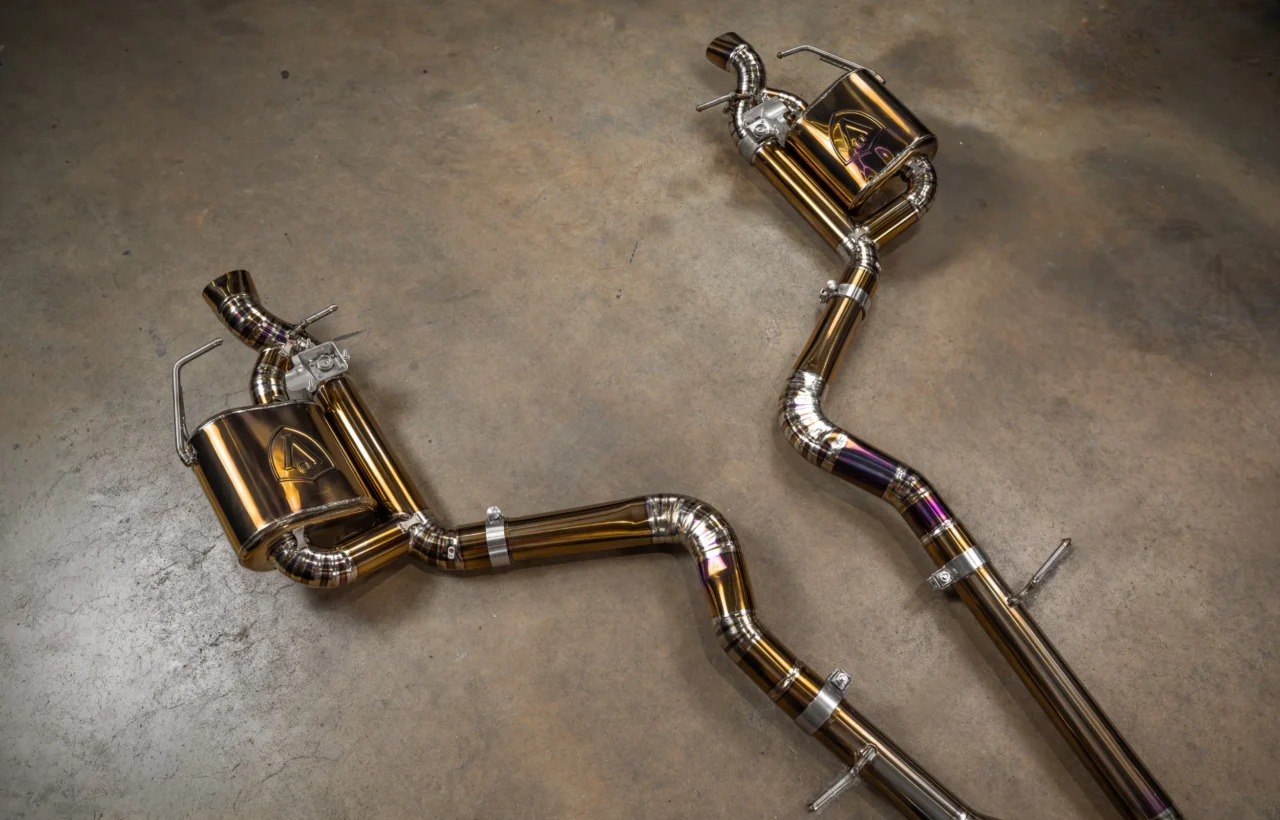
There’s something special about a Mercedes-AMG. Even before the engine fires, the car has a certain presence. Then comes the exhaust note, the instant shove of torque, and that feeling that there’s considerably more performance waiting underneath the surface. For many AMG owners, modifying the exhaust system is one of the most appealing ways to make the car feel more personal.
Downpipes are often near the top of that list. They sit close to the turbocharger and play an important role in moving exhaust gases into the rest of the system. Changing them can alter sound, exhaust flow, throttle response, and, when combined with suitable software, the overall character of the vehicle. But there’s more to choosing a downpipe than simply picking the loudest option available.
Understanding the Role of a Downpipe
A downpipe is the section of exhaust connected directly to the turbocharger. Because the exhaust gases are extremely hot and moving quickly, this section can have a noticeable effect on how efficiently the turbo system works.
Factory components are engineered to meet several goals at once: emissions compliance, noise control, durability, comfort, and performance. Aftermarket downpipes generally focus more heavily on airflow and performance. Depending on the design, they may feature larger tubing, smoother bends, different catalyst arrangements, and freer-flowing construction.
That doesn’t mean every aftermarket part will automatically improve a vehicle. Design and manufacturing quality matter a lot. A poorly fitting component can introduce leaks, unwanted vibration, or sensor problems.
The Mercedes-AMG GT 63 X290
The AMG GT 63 X290 is a serious performance machine, and owners often want modifications that match its personality without destroying its refinement. When researching mercedes gt63 x290 downpipes , it’s important to consider the complete exhaust setup rather than viewing the downpipe as an isolated component.
A well-engineered upgrade can change the way the exhaust sounds under acceleration and may reduce restrictions in the exhaust path. For enthusiasts, that sharper response and more aggressive character can make an already exciting car feel even more alive.
Still, the GT 63 is also capable of being a comfortable daily driver. Excessive exhaust volume or cabin drone might sound exciting for ten minutes, but it can become annoying during a two-hour highway journey. Balance is key.
Why E53 AMG Owners Look at Downpipe Upgrades
The Mercedes-AMG E53 occupies an interesting place in the AMG lineup. It combines strong performance with a more understated personality, making it attractive to drivers who want speed without constantly announcing it.
For someone researching a downpipe mercedes e53 amg , the first step should be understanding the exact model year and engine configuration. Mercedes has introduced different technical configurations across model generations, and parts aren’t necessarily interchangeable simply because the badges look similar.
Owners should check turbocharger configuration, mounting points, sensor locations, catalyst design, and software compatibility before ordering anything. It sounds obvious, but these details can save a lot of trouble later.
Catted vs. Catless Downpipes
One of the biggest decisions in the aftermarket world is choosing between catted and catless downpipes.
A catted downpipe retains a catalytic converter designed to reduce certain exhaust emissions. Depending on its construction and certification, it can offer a compromise between improved exhaust flow and maintaining some emissions-control functionality.
Catless designs remove the catalytic converter from the downpipe. They are generally associated with a more aggressive exhaust character and fewer restrictions, but they can also create emissions-related issues, stronger smells, louder sound, and potential warning-light or software complications.
For drivers comparing mercedes e63 w213 catted and catless downpipes , the right choice depends heavily on intended use. A vehicle driven primarily on public roads has different requirements from a dedicated competition or track vehicle.
Sound Isn’t the Whole Story
Let’s face it, sound matters. AMG owners aren’t buying these cars purely to commute from one traffic light to another. The engine note is part of the experience.
A freer-flowing exhaust can make turbo sounds more noticeable and give acceleration a harder edge. But sound is subjective. What feels thrilling on an empty road might become tiring when you’re stuck in traffic.
Other exhaust components also influence the final result. The downpipe works alongside the mid-pipes, resonators, mufflers, and exhaust valves. Changing several pieces at once can produce a dramatically different result compared with replacing only one section.
Materials and Construction
When shopping for performance exhaust parts, don’t get distracted by horsepower claims alone. Construction quality deserves attention.
Stainless-steel systems are popular because they’re resistant to corrosion and capable of handling high temperatures. High-quality welds, properly positioned oxygen-sensor ports, accurate flanges, and adequate heat clearance are all signs of a thoughtfully engineered component.
Fitment is particularly important around the turbocharger. There isn’t much room for mistakes in a tightly packaged engine bay. A downpipe that sits too close to wiring, hoses, or other heat-sensitive components can create problems over time.
Software and Supporting Modifications
Modern Mercedes-AMG vehicles rely heavily on electronic engine management. Sensors continuously monitor things such as oxygen content, temperatures, boost, and other operating parameters.
Because of this, changing exhaust hardware can affect how the engine-management system behaves. Some setups may require appropriate ECU calibration, while others may trigger diagnostic warnings depending on the catalyst configuration and vehicle software.
That’s why a good performance plan considers hardware and software together. It also makes sense to keep supporting modifications in mind, especially if the owner eventually plans to increase boost or pursue larger performance gains.
Installation and Long-Term Reliability
Installation is another area where cutting corners rarely pays off.
A professional installer can check for proper alignment, sensor placement, exhaust leaks, heat clearance, and hardware security. After the installation, the system should be inspected again once it has gone through heat cycles.
Regular checks are especially useful on high-performance vehicles. Vibrations, thermal expansion, and repeated hard driving can place additional stress on exhaust components and mounting hardware.
Choosing the Right Setup for Your Driving Style
There’s no universal “best” downpipe. The ideal setup depends on what you expect from your Mercedes-AMG.
A daily driver might benefit from a catted configuration that keeps noise and smell more manageable. Someone building a track-focused car may have different priorities. Owners who value a factory-like experience should also consider how the modification affects comfort, emissions compliance, servicing, and resale.
Before buying, research compatibility carefully and make sure the component is intended for the exact vehicle and engine configuration.
Final Thoughts
Downpipes can be an exciting part of a Mercedes-AMG build. They have the potential to change exhaust character and, as part of a properly matched system, support broader performance goals. But the smartest modifications aren’t necessarily the most extreme ones.
Quality, compatibility, installation, software considerations, and local emissions regulations all deserve attention. After all, the best performance car is one you actually enjoy driving.
For AMG enthusiasts, that might mean a deeper exhaust note, quicker response, or simply a more purposeful feeling every time the throttle is pressed. Sometimes, that’s all a good modification needs to accomplish.