
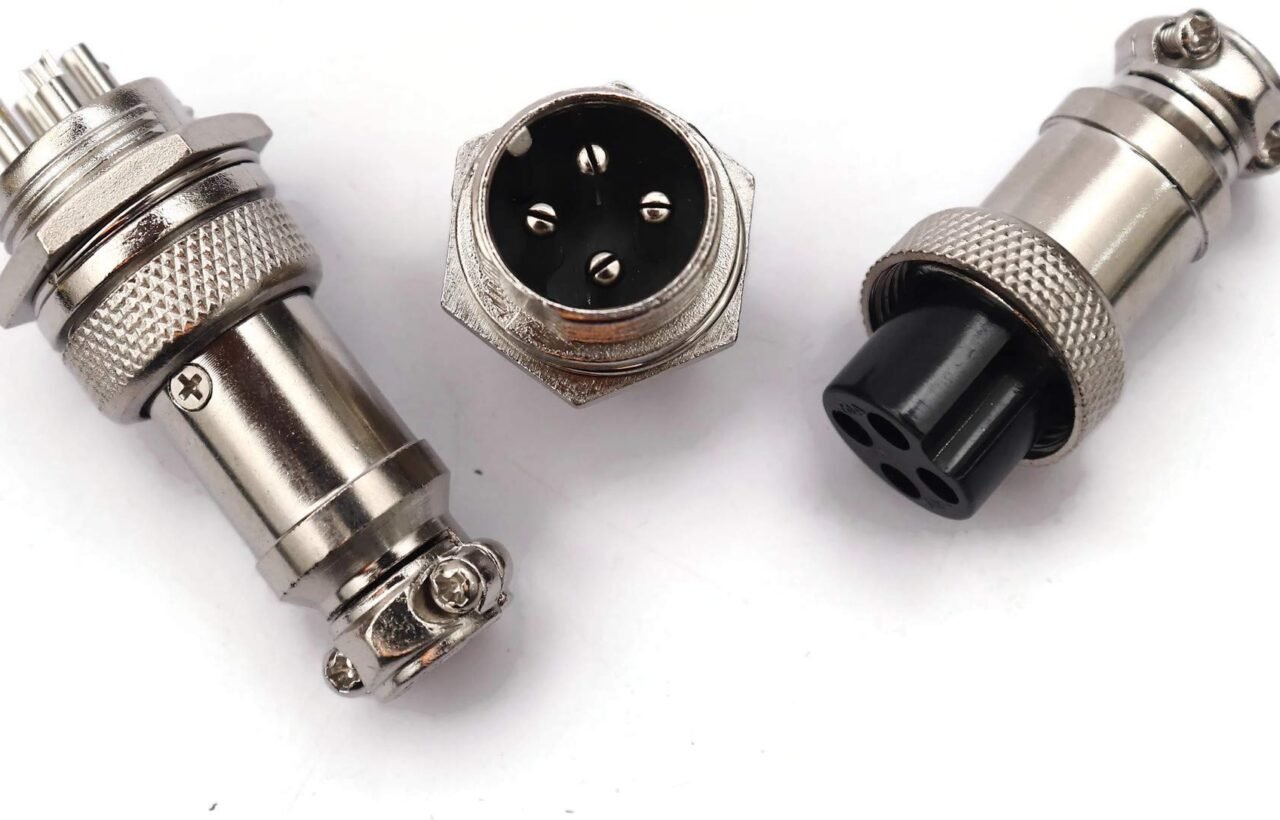
A circular connector family that has been manufactured for sixty years accumulates something that no amount of marketing can replicate: a field record. Across different industries, different climates and different operating conditions, the families of circular connectors that Allied Electronics Corporation has been building in Mumbai since 1966 have found application in environments as different as armoured fighting vehicles and marine vessel engine rooms, metro station switchgear and rural power plant control panels. Examining the range of applications illuminates both the versatility of the circular connector format and the specific demands that each sector places on the interconnect hardware it specifies.
Defence and Paramilitary Applications
The defence sector was the original market for mil grade circular connectors, and it remains the most demanding. Military vehicles, ground support equipment, radar systems, communication electronics and weapon system electronics all require connectors that perform reliably after years of vibration, exposure to fuel, lubricant and cleaning agents, and the mechanical abuse of operational use. Defence applications also impose the most rigorous qualification requirements, with Ministry of Defence approval processes that include laboratory testing and factory audits.
Within defence, the range of application is wide. An armoured vehicle carries dozens of connectors for engine management, turret control, crew communication and navigation electronics, each seeing a different vibration spectrum and thermal environment. A ground-based radar system uses circular connectors for RF signal paths, power feeds and control wiring, often in combinations that require hybrid insert arrangements mixing signal and power contacts in a single shell. Allied Connectors from Allied Electronics Corporation are qualified for these defence applications and are listed on approved vendor lists maintained by several defence production organisations.
Related reading: Why Local Brands Are Quietly Moving Direct-to-Consumer—and Why It Matters More Than You Think
Railway and Metro Rail
Indian Railways is the largest single consumer of circular connectors in India, and the metro rail expansion has added further demand. Rolling stock applications span traction systems, brake electronics, door controllers, passenger information systems and inter-vehicle jumpers, each with different connector requirements. Trackside applications include signal heads, point machines and axle counter sensors, operating in fully outdoor conditions without the benefit of climate control.
Railway applications impose specific requirements around fire safety, which EN 45545-2 addresses for rolling stock, and around vibration, which is continuous, broadband and unavoidable on a steel wheel running on steel rail. Connectors for railway use must also be maintainable by depot technicians using standard tooling, because a connector that requires specialised equipment to service becomes a maintenance bottleneck at depots that turn around dozens of vehicles per night.
Power Generation and Transmission
Power plants — thermal, hydro, nuclear and increasingly renewable — use circular connectors in control and protection circuits where reliability over a thirty-year plant life is a basic requirement. Generator protection relays, turbine control systems and switchgear auxiliary circuits carry low-level signals that must remain stable despite the electromagnetic interference generated by high-voltage switching events. Connectors in these applications must maintain consistent contact resistance across thousands of thermal cycles and must remain fully sealed against the humidity and, in some locations, the chemical contamination of the plant environment.
Related reading: Building Something Real: The Quiet Trade-offs Between Bootstrapped and Funded Startups
Hydroelectric plants present the additional challenge of altitude and outdoor exposure for generator hall and penstock instrumentation. Plants in the Himalayas and the Western Ghats operate at temperatures that stress both connector materials and lubricants, and the remote locations make maintenance intervals long and emergency spares procurement difficult. Specifying well-supported connector families from qualified Indian manufacturers reduces the logistics burden considerably.
Marine and Offshore Applications
Marine applications represent one of the most demanding environments for electrical connectors: continuous salt spray, humidity approaching saturation, vibration from propulsion machinery, and the practical maintenance constraint that equipment at sea cannot easily be replaced. Connectors for marine use require shell materials and plating systems with demonstrated salt spray resistance, sealing systems that maintain integrity despite the fatigue loading of continuous vessel motion, and a coupling mechanism that a crew member can operate correctly even in a heaving sea.
Where Soviet or Russian-built marine equipment is maintained — and a significant portion of India’s coastal and river fleet includes such vessels — replacement connectors built to metric and Russian standards are a specific requirement. Domestically manufactured Russian metric connectors provide a locally sourced alternative to imported spares, with the supply continuity advantages that domestic sourcing provides for vessels on long deployments.
Related reading: The Rise of the Creator Economy and Why Small Businesses in India Are Finally Being Heard
Industrial Automation and Machine Tools
India’s machine tool industry, concentrated in Pune, Coimbatore and the NCR, uses circular connectors extensively for servo drive interfaces, spindle motor connections and the dense sensor networks of modern CNC equipment. Industrial automation in food processing, pharmaceuticals and chemicals adds the requirement for resistance to cleaning chemicals and washdown water, which circular connectors handle through their inherent sealing geometry more reliably than rectangular alternatives.
Why Application Breadth Matters for Procurement
A connector manufacturer whose products are proven across multiple demanding sectors has a richer base of field experience than one focused on a single application. Problems that emerge in one sector — a plating formulation that degrades in an unexpected chemical environment, a seal compound that performs poorly at extreme temperatures — are identified and corrected across the full product range rather than in isolation. For procurement teams, a supplier with demonstrated cross-sector application experience is a lower-risk choice than a specialist whose field record is narrow. Allied Electronics Corporation serves this breadth of applications from a single manufacturing base in Mumbai, with the same quality system and engineering team behind products going to defence, railways, power plants and machine builders.
Conclusion
The versatility of the circular connector format, combined with the flexibility of the MIL and VG specification frameworks, allows a well-managed connector family to serve radically different industries without compromising its core performance characteristics. For engineers and procurement officers working across multiple sectors, standardising on a proven circular connector family from a qualified Indian manufacturer simplifies supplier management, supports indigenisation requirements and ensures that application engineering support is available regardless of which sector the next project falls into.
Related reading: Figuring Out What Your Business Is Really Worth Before You Let It Go