
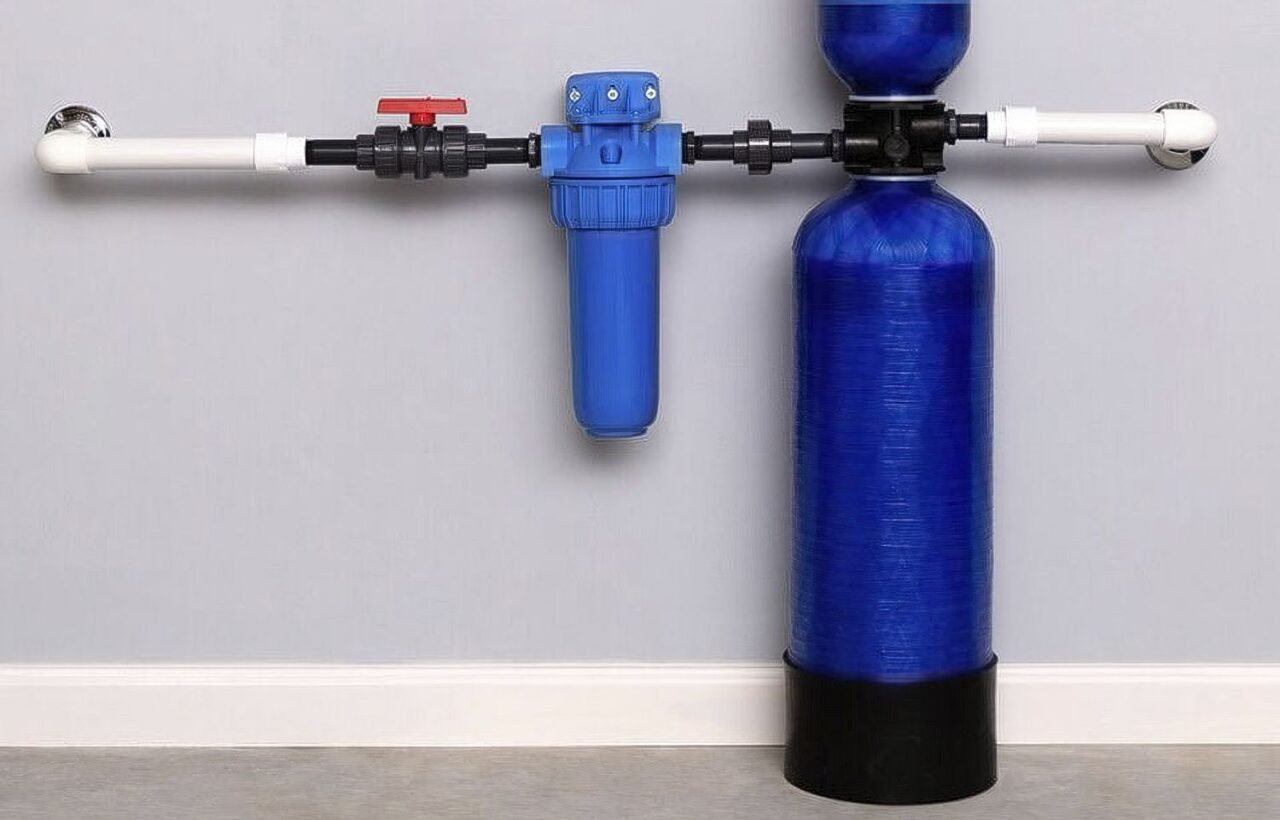
Water treatment is no longer just about removing something unpleasant from a glass of drinking water. For many homeowners, it’s about the bigger picture—protecting plumbing, reducing scale, improving everyday water use and choosing equipment that makes sense financially and environmentally.
That can be tricky. There are plenty of products on the market, and each one promises something slightly different. The best choice, however, usually starts with a simple question: what does your water actually need?
Understanding Your Home’s Water
Before investing in treatment equipment, it helps to understand the characteristics of your water. Hardness, sediment, iron, chlorine, acidity and other factors can influence how water behaves inside your home.
Related reading: A Smarter Approach to Cleaner Water at Home
Hard water, for example, can leave scale around faucets and inside appliances. It may also make soap and shampoo harder to rinse away. Other water-quality concerns may affect taste or odor rather than create visible problems.
Testing gives you a useful starting point. Instead of buying equipment based on advertising or a neighbor’s recommendation, you can choose a treatment method based on actual water conditions.
Why Water Softeners Remain Popular
One of the most common household water-treatment options is a softener.
Related reading: Finding the Right Water Treatment System Without Overcomplicating It
Traditional water softeners are designed primarily to reduce hardness minerals such as calcium and magnesium. By doing so, they can help reduce scale buildup and make everyday cleaning tasks somewhat easier.
If you’ve ever scrubbed a shower screen covered in stubborn white deposits, you already understand why homeowners pay attention to hardness.
A softener isn’t intended to solve every possible water problem, though. It doesn’t automatically remove every contaminant, and it shouldn’t be treated as a universal filtration system. Knowing the difference between softening and filtration can prevent disappointment later.
Related reading: A Better Approach to Hard Water: Choosing the Right System for Your Home
Looking at Environmental Water Treatment
Homeowners are also becoming more interested in the environmental side of water management.
The idea behind environmental water treatment is broader than simply making water look or taste better. It can involve considering water use, wastewater, energy consumption, equipment efficiency and the long-term impact of treatment processes.
For example, some systems require regular regeneration, which can involve water and salt. Others use different technologies with different maintenance requirements.
Related reading: Why Better Water Starts with Smarter Choices at Home and Work
There isn’t one treatment method that’s automatically the most environmentally responsible for every household. The right choice depends on the water problem, the system’s efficiency and how much water the household consumes.
It’s worth looking beyond the initial purchase price.
The Appeal of Economical Water Conditioners
Not every home needs a large, complicated treatment setup. For households with relatively mild water concerns, a simpler solution may be more practical.
Related reading: Why Better Water at Home Starts With Smarter Filtration Choices
Some homeowners explore economical water conditioners as an alternative to conventional softening equipment. Depending on the technology, these systems may aim to reduce the effects of scale or alter how minerals behave without using the same process as a traditional ion-exchange softener.
The important thing is to understand exactly what a conditioner does. “Conditioning” and “softening” aren’t necessarily the same thing, and performance claims should be evaluated carefully.
Ask for clear specifications and evidence of what the system can realistically accomplish.
Consider the Long-Term Cost
Price isn’t only the number on the invoice.
A treatment system may have a low purchase price but require expensive replacement filters, frequent servicing or significant amounts of salt and water. Another system may cost more initially but require less ongoing attention.
When comparing options, look at the total cost of ownership. Consider installation, maintenance, consumables, electricity, regeneration water and replacement parts.
This simple calculation can change which option looks like the better deal.
Efficiency Matters at Home
A water-treatment system should work with your household rather than against it.
If your family uses a lot of water, equipment needs to have sufficient capacity and flow rate. An undersized system may struggle during periods of heavy demand. An oversized system, meanwhile, may cost more than necessary.
Modern treatment equipment can also include automated controls that adjust operation according to usage or water conditions. These features can improve convenience and, in some cases, help reduce unnecessary resource consumption.
Still, technology alone doesn’t guarantee efficiency. Proper installation and regular maintenance matter just as much.
Maintenance Shouldn’t Be an Afterthought
Even a well-designed system requires care.
Filters need replacing. Softeners may need salt. Components eventually wear out. Some systems require periodic cleaning or servicing.
Ignoring maintenance can reduce performance and increase operating costs. It can also make it harder to identify when the equipment itself has developed a problem.
Before buying, ask what routine maintenance involves and how frequently it’s required. If the answer sounds unnecessarily complicated, you may want to keep looking.
Choose Treatment Based on Your Actual Needs
There’s a temptation to assume that more treatment is always better. It isn’t.
If your only concern is hard water, you may not need a multi-stage filtration system designed to handle a long list of unrelated contaminants. On the other hand, if your water contains iron, sediment or other specific issues, a basic conditioner may not be enough.
The smartest approach is to test the water first and then match the treatment technology to the results.
A Better Water Solution Doesn’t Have to Be Complicated
Good water treatment is really about balance.
You want water that works well for your household, equipment that addresses genuine problems and a system that doesn’t create unnecessary expense or waste. Whether you ultimately choose a softener, conditioner, filtration system or a combination of technologies, the decision should be based on your water and your priorities.
The best system isn’t necessarily the newest or most expensive one. It’s the one that does the job properly, fits your household and remains practical to operate year after year.
A little research before installation can save plenty of money—and a fair amount of frustration—later on.