
Hard water has a funny way of making itself known. At first, it might be nothing more than a few white spots on the bathroom faucet. Then the shower door starts looking cloudy, soap doesn’t seem to rinse properly, and the kettle develops a crusty layer inside. Eventually, you start wondering why everything feels just a little harder to clean.
The good news is that hard water is a common household issue, and there are several ways to manage it. Traditional water softeners remain a popular choice, while newer technologies offer alternatives for homeowners who don’t want to deal with salt or brine tanks.
The right solution depends on your water chemistry, household needs, and what you’re actually trying to fix.
Related reading: Why Better Water at Home Starts with the Right Whole-House Solution
What Makes Water Hard?
Hard water contains elevated levels of naturally occurring minerals, particularly calcium and magnesium. As groundwater moves through rocks and soil, it can pick up these minerals before reaching a well or municipal supply.
Hard water isn’t necessarily dangerous to drink. The bigger concern for many households is what it does around the house.
Minerals can form scale inside plumbing and appliances. Faucets may develop stubborn deposits, showerheads can become clogged, and soap can react with minerals to create that familiar film on sinks and bathtubs.
Related reading: Choosing the Right Water Filtration System Without Feeling Overwhelmed
Over time, the buildup may affect water heaters and other equipment too.
How Traditional Water Softeners Work
Conventional Nero Clear water treatment solutions and traditional softening approaches are designed to address mineral-related water hardness, though homeowners should always check the specific technology and performance claims of any branded product.
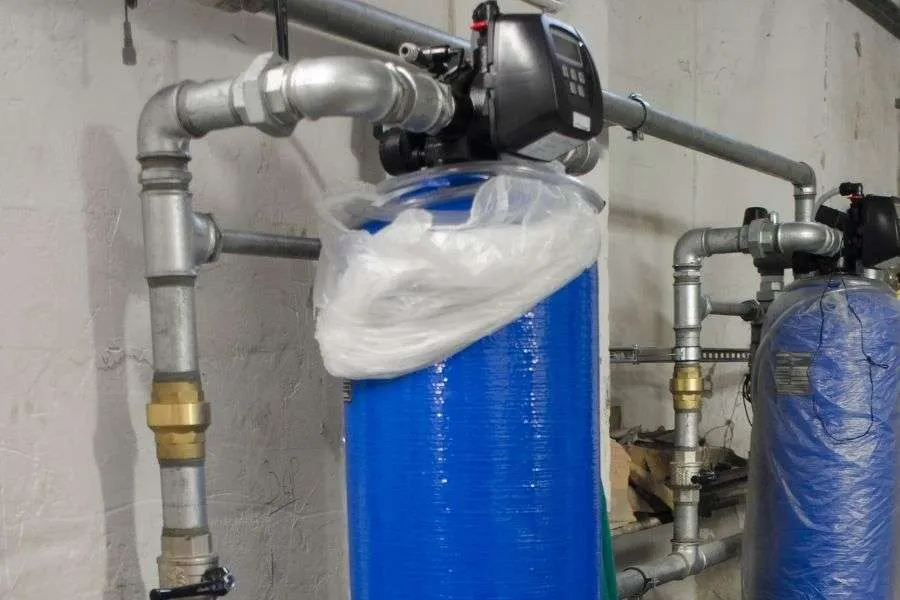
Traditional ion-exchange softeners use resin beads to capture calcium and magnesium from incoming water. The system periodically regenerates the resin using a salt-based brine solution.
Related reading: Why the Right Drinking Water System Can Change Your Daily Routine
This method has been used for decades and can be highly effective when properly sized and maintained.
There is, however, some upkeep involved. Salt needs to be replenished, the system requires periodic regeneration, and homeowners need to keep an eye on equipment performance.
For many households, that’s a perfectly reasonable trade-off. For others, it can be a nuisance.
Related reading: A Smarter Approach to Cleaner Water at Home
Why Some Homeowners Prefer Salt-Free Options
The growing interest in saltless systems is partly about convenience.
These systems generally don’t use traditional ion exchange to remove calcium and magnesium. Instead, some use technologies intended to alter how minerals behave so they are less likely to form hard scale on surfaces.
That’s an important distinction.
Related reading: Finding the Right Water Treatment System Without Overcomplicating It
Salt-free systems aren’t necessarily “water softeners” in the traditional sense because they typically don’t remove the hardness minerals from the water. Their purpose is often scale control rather than true softening.
For homeowners who want to reduce scale without handling bags of salt, that can be attractive.
Still, expectations matter. If you specifically want a measurable reduction in calcium and magnesium, you should understand how the selected system works before purchasing it.
Comparing Different Water Treatment Approaches
Choosing between treatment technologies shouldn’t be based solely on advertising.
Traditional softeners are generally suited to households that want actual hardness reduction. Salt-free conditioners may appeal to people primarily concerned about scale. Filtration systems, meanwhile, can address completely different issues such as sediment, chlorine, taste, or odor.
Some homes may benefit from combining technologies.
For example, a household might use a sediment filter to protect downstream equipment, a softening system to manage hardness, and a separate drinking-water filter at the kitchen sink.
There isn’t a universal setup because there isn’t a universal water supply.
Start With a Water Test
Before spending money on equipment, test the water.
This sounds obvious, but it’s surprisingly easy to skip. A homeowner notices white scale and immediately assumes hardness is the only issue. Yet water can contain iron, manganese, sediment, chlorine, or other characteristics that affect treatment choices.
A basic water analysis can provide useful information about hardness, pH, iron, manganese, turbidity, total dissolved solids, and other relevant parameters.
If you use private well water, testing can be particularly valuable because groundwater chemistry varies considerably between locations.
Knowing what’s actually in the water helps you avoid buying equipment that solves the wrong problem.
What About Maintenance?
Every treatment system requires some level of maintenance. The difference is how much and what kind.
Traditional softeners require salt replenishment and periodic servicing. Filters need cartridge replacement. Some electronic or specialty systems require inspection or replacement of specific components.
The easiest system to own is usually the one whose maintenance fits naturally into your routine.
If you don’t want to carry heavy salt bags every few weeks, that should be part of your decision. If you prefer a proven technology and don’t mind maintenance, a conventional softener may still be an excellent choice.
There’s no prize for choosing the most complicated system.
Looking at the Bigger Household Picture
Water hardness affects more than faucets.
Scale can accumulate inside water heaters, dishwashers, washing machines, coffee makers, and plumbing fixtures. It can also make cleaning more time-consuming because mineral deposits tend to return after you’ve just removed them.
For some homeowners, the biggest benefit of treatment isn’t how the water tastes. It’s the reduction in daily irritation.
A shower that stays cleaner. A faucet without white crust around the base. Less scale inside appliances. Those small improvements add up.
When a Salt-Based Softener May Be Better
If your primary goal is genuine hardness reduction, a conventional softener remains an important option.
It can be particularly useful when water hardness is high enough to cause persistent scale, affect cleaning, or interfere with appliances.
However, sizing matters. A system that’s too small may regenerate too frequently, while an oversized unit can be unnecessarily expensive.
Professional installation and proper settings can help the system operate more efficiently.
When a Salt-Free System May Make Sense
A salt-free conditioner may be worth considering when the homeowner’s primary concern is scale control and they don’t want the ongoing maintenance associated with traditional softeners.
It can also appeal to households with limited space or people who simply prefer a lower-maintenance setup.
But don’t expect every salt-free technology to behave like an ion-exchange softener. Ask what the system actually does, what water conditions it supports, and what results have been independently verified.
A clear understanding of the technology prevents disappointment later.
Making the Right Choice for Your Home
There isn’t one perfect answer for everyone.
If you have hard water, start by testing it. Understand the hardness level and identify any other water-quality concerns. Then compare traditional softeners, salt-free conditioners, filtration systems, or combinations based on your actual needs.
The best water-treatment system isn’t necessarily the newest or most expensive one. It’s the one that addresses your problem effectively, fits your lifestyle, and doesn’t become a headache six months after installation.
Hard water may be a stubborn household nuisance, but it doesn’t have to stay that way. With good information and the right treatment approach, you can protect your plumbing, reduce scale, and make everyday water use a little easier.