
There’s something oddly personal about the water in your home. You drink it half-awake in the morning, cook pasta with it after a long day, rinse apples under it, make baby bottles with it, wash your face with it. It’s everywhere, quietly woven into the routine. So when the water tastes a bit off, smells strange, or leaves marks on everything it touches, it can make the whole house feel less clean than it should.
Most people don’t wake up thinking about water treatment. Fair enough. Life is busy. But the quality of your water has a way of showing up in small, repeated moments. A cloudy glass. A metallic taste. A sink that never seems to stay spotless. Sometimes the signs are obvious, sometimes not so much.
Why water quality deserves attention
Water can carry minerals, sediment, chlorine, organic compounds, and other unwanted substances depending on where it comes from and how it travels before reaching your tap. Municipal water is treated before entering homes, but that doesn’t always mean it tastes great or meets every family’s comfort expectations. Well water can have its own set of concerns too, from iron staining to odors and dissolved solids.
Related reading: Clean Water Starts at Home: Understanding Modern Solutions for Better Drinking Water
That’s where proper contaminant removal becomes important. It isn’t about fear or overcomplicating things. It’s about understanding what’s in the water and choosing a solution that helps reduce the issues affecting taste, smell, safety, or daily use. Good water treatment starts with facts, not guesswork.
The problem with “one-size-fits-all” solutions
A pitcher filter may help with basic taste concerns, but it won’t solve every water problem in a home. A softener can reduce hardness, but it doesn’t work like a drinking water filter. A whole-house filter may improve water coming through every tap, yet some homeowners still want extra filtration at the kitchen sink.
The point is, water treatment works best when it’s matched to the actual problem. That usually begins with testing. Once you know whether you’re dealing with hardness, chlorine, sediment, high dissolved solids, or specific contaminants, the right path becomes much clearer.
Related reading: How Modern Water Softeners Make Everyday Home Life Easier
When drinking water needs extra care
For many families, the biggest concern is the water they drink and cook with. Even if the water looks clear, taste and dissolved impurities can make people reach for bottled water instead. Over time, that becomes expensive, wasteful, and honestly a bit annoying.
This is where reverse osmosis systems are often considered. These systems are commonly used for drinking water because they can reduce many dissolved substances through a multi-stage process. They’re usually installed under the kitchen sink and connected to a dedicated faucet. The result is water that often tastes cleaner, lighter, and more pleasant for everyday use.
Filtration is not just about taste
Taste matters, of course. Nobody wants a glass of water that smells like a swimming pool. But filtration can also help with the water used for cooking, coffee, tea, ice, and even pet bowls. You start noticing the difference in small places. Soup tastes a little cleaner. Coffee doesn’t have that dull edge. Ice cubes don’t carry an odd smell.
Related reading: A Smarter Approach to Cleaner Water at Home
Some homeowners don’t realise how much water quality affects daily routines until they improve it. Then, suddenly, going back feels unpleasant. It’s a bit like wearing clean glasses after months of smudges — you didn’t know how cloudy things had become until they cleared up.
How activated carbon helps
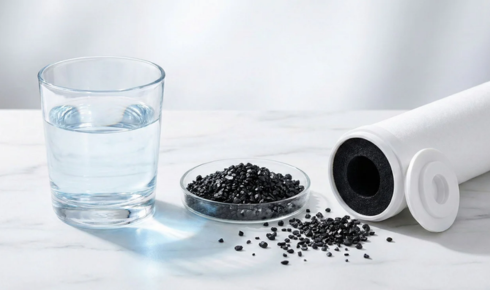
Many water filters use carbon because it’s effective for reducing certain tastes, odors, and chemicals. The basic idea is simple: water passes through carbon media, and unwanted substances are trapped or reduced as the water moves along. It’s not flashy, but it works quietly and reliably when used in the right system.
One common option is granular activated carbon, which is often used in filtration systems to help improve taste and reduce chlorine-related odors. It can be part of a whole-house setup, a drinking water system, or another treatment design depending on the water issue. Like any filter media, it needs proper sizing and maintenance to keep doing its job.
Related reading: A Better Approach to Hard Water: Choosing the Right System for Your Home
Maintenance keeps the system honest
A water treatment system isn’t something you install and forget forever. Filters eventually need replacing. Membranes wear down. Media can lose effectiveness. If maintenance is ignored, performance drops, and the system may no longer provide the quality you expected.
The good news is that maintenance doesn’t have to be difficult. A professional can explain the schedule, show what needs replacing, and help keep the system working properly. For homeowners, it’s mostly about staying consistent. A little care goes a long way.
Better water makes home life easier
Clean, pleasant water doesn’t need to be dramatic to be valuable. It simply makes daily life feel better. You trust the glass you pour. You cook without second-guessing the taste. You stop buying so many plastic bottles. The kitchen feels more useful, and the home feels a bit more cared for.
Related reading: Why Better Water Starts with Smarter Choices at Home and Work
Water treatment is not about chasing perfection. It’s about removing the everyday annoyances that shouldn’t be part of living comfortably. Once you understand what your water needs, the right system can make a real difference — quietly, steadily, and every single day.